The Benefits Of Aerodome™
- Between 5–14% reduction in aerodynamic drag
- Estimated 3–7% fuel savings per journey
- Reduced emissions and improved fleet efficiency
- No permanent modification required
- Scalable across existing container fleets
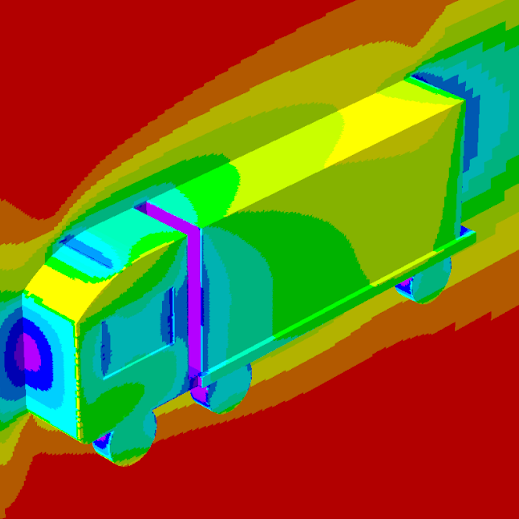
This is a wind tunnel simulation of an HGV transporting a standard shipping container without our product. Airflow separates at the rear edges of the container, creating a larger wake region behind the vehicle. The air moving over the top of the container also becomes more turbulent, which increases aerodynamic drag during transport.
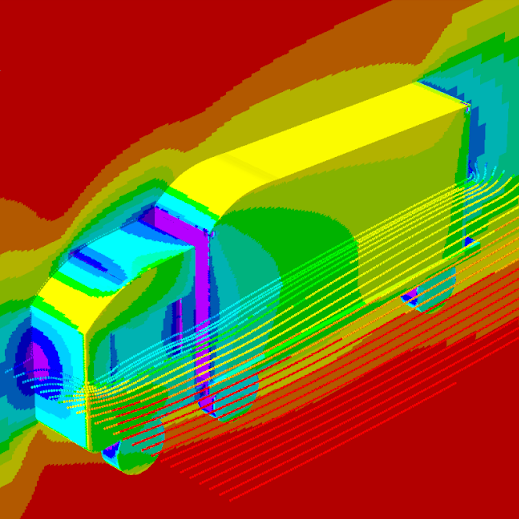
This wind tunnel simulation shows the same HGV fitted with Aerodome. The device helps guide airflow more smoothly over the top of the container, reducing turbulence and narrowing the wake region behind the vehicle. This smoother airflow reduces aerodynamic resistance and contributes to lower drag.
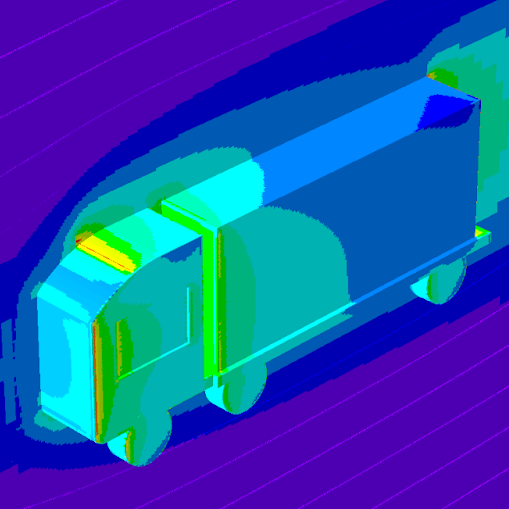
This simulated pressure analysis shows an HGV transporting a standard shipping container without Aerodome. Higher pressure forms at the front and top of the container, while airflow separates sharply at the rear edges, creating a large low-pressure wake region behind the vehicle that increases aerodynamic drag.
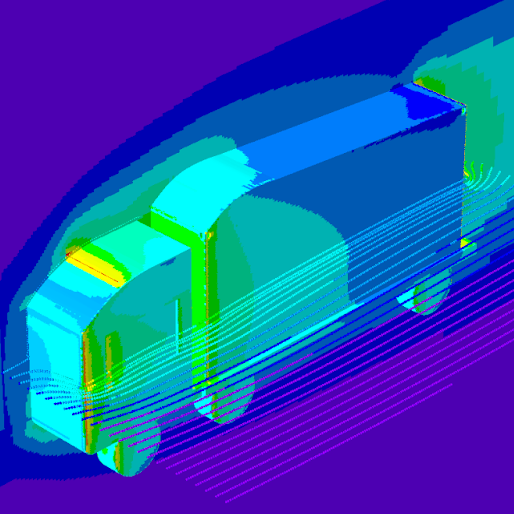
This pressure simulation shows the HGV fitted with Aerodome. The device improves the airflow transition over the top of the container, reducing pressure differences and smoothing the airflow behind the vehicle. This results in a smaller wake region and lower aerodynamic drag during transport.
Across a large fleet, even a 3–7% fuel saving can translate into significant operational cost reductions over time.
Industry Impact:
Road freight is responsible for transporting millions of shipping containers every year, forming a critical part of global logistics networks. However, standard shipping containers were never designed with aerodynamics in mind, and their box-shaped geometry leads to high levels of turbulent air on the top and back of the container, and creates significant drag during highway transport.
This aerodynamic inefficiency contributes to increased fuel consumption, higher operating costs, and unnecessary emissions across container transport fleets worldwide.
Even small improvements in aerodynamic efficiency can have a substantial impact when applied at scale. A reduction in drag of just a few percent across large fleets can translate into meaningful savings in fuel usage, lower operational costs, and reduced environmental impact.
Aerodome has been designed to address this challenge with a practical solution that integrates with existing container infrastructure, enabling improved aerodynamic performance without requiring permanent modification to containers.
Container Transport Scale
16.6 billion
vehicle miles in 2024
Travelled by all HGV vehicles in the UK, according to the Department for Transport (DfT).
£40,000–£60,000
Average diesel costs per year
As of 2022 for a 44-tonne articulated lorry covering 80,000–100,000 miles per year, found from the DfT.
80%
Freight Transport Share
The percentage of domestic freight in the UK that is transported by road, found from the DfT.
30–40%
of fuel used at highway speeds spent overcoming drag
At motorway speeds, aerodynamic resistance becomes one of the largest contributors to fuel consumption, found from recent research.
60%
of global trade is transported in shipping containers
By value in Standardised containers, which carry the majority of manufactured goods across global supply chains; as found by the United Nations Conference on Trade and Development (UNCTAD) maritime reports.
200 Million +
Container trips worldwide
In one year, with the European Comission stating there are around 20–30 million containers in active circulation worldwide.
Who Aerodome Is For:
Aerodome is designed for organisations involved in the haulage of shipping containers by road, particularly where container transport forms a significant part of day-to-day operations.
This includes container logistics operators, intermodal freight companies, and fleet operators responsible for transporting containers between ports, rail terminals, and distribution centres. These operations often involve high-mileage routes where aerodynamic drag becomes a significant factor affecting fuel consumption.
The system is intended for operators seeking practical solutions that improve transport efficiency without requiring major changes to existing vehicles or container infrastructure.
The Opportunity
With over 1.59 billion tonnes of goods transported by GB-registered HGVs in 2024 (Source: UK Department for Transport, Road Freight Statistics), improving the aerodynamic performance of container transport presents a significant opportunity to reduce fuel consumption, operating costs, and emissions across the freight sector.
By reducing aerodynamic drag, technologies designed for container transport have the potential to improve overall vehicle efficiency, particularly during motorway travel where aerodynamic resistance becomes one of the dominant factors affecting fuel consumption.
As containerised freight continues to play a central role in global supply chains, practical aerodynamic solutions that integrate with existing infrastructure could contribute to meaningful efficiency gains across the transport industry while supporting the transition toward more sustainable logistics operations.
Container Aerodynamics Ltd
Incorporated October 2024
United Kingdom
Contact Us
enquiries@containeraerodynamics.co.uk
07356 055 350
Follow our progress
LinkedIn: Container Aerodynamics
Instagram: @Containeraerodynamics
TikTok: @Containeraerodynamics
Youtube: @Containeraerodynamics
© 2026 Container Aerodynamics Ltd. All rights reserved.